Lower Attic Temperatures
Actively exhausts superheated attic air instead of relying exclusively on passive airflow.

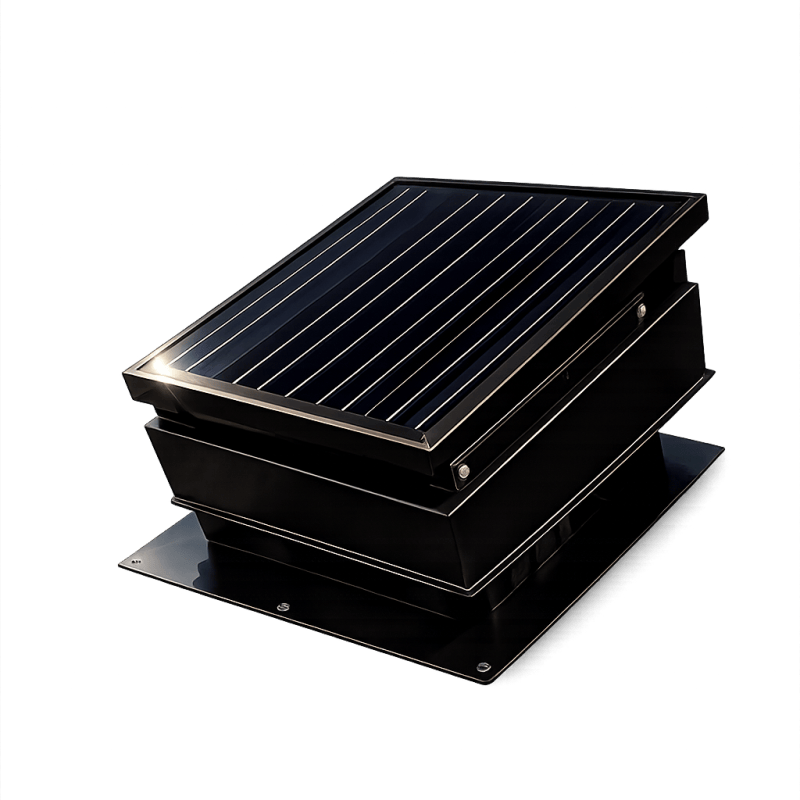
A Solar Attic Mechanical Vent automatically removes trapped hot and humid air using a solar-powered brushless DC motor—with no additional electrical operating cost.

During the heat of an Oklahoma summer, attic temperatures can reach anywhere from 140°F to 150°F—or even higher. That trapped heat does not simply stay above your ceiling. It radiates into your living space and forces your air-conditioning system to work harder to maintain a comfortable indoor temperature.
The result can be longer HVAC run times, additional wear on your equipment and higher seasonal energy costs.
A Solar Attic Mechanical Vent uses the sun's energy to power a brushless DC motor. As heat builds inside the attic, the system actively draws trapped air upward and exhausts it through the roof.
As hot air is removed, replacement air can enter through the home's existing intake ventilation. This continuous airflow helps keep attic temperatures more manageable and reduces the amount of heat radiating into the home.

Active solar ventilation can help improve attic conditions while supporting the systems and materials that protect your home.
Actively exhausts superheated attic air instead of relying exclusively on passive airflow.
Reducing the heat load above your ceiling can help your cooling system maintain indoor comfort more efficiently.
Lower attic temperatures may reduce cooling demand and seasonal energy costs, depending on home conditions.
The built-in humidistat helps exhaust damp attic air when indoor humidity rises above the operating threshold.
Controlling attic moisture can help reduce conditions associated with condensation, mold, wood rot and ice damming.
The brushless DC motor operates using solar energy rather than electricity supplied by the home.
The roof-mounted solar panel converts available sunlight into power for the vent's DC motor.
The brushless mechanical fan begins moving air without drawing electricity from the home.
Trapped hot and humid air is pulled upward and released through the roof-mounted vent.
Intake ventilation allows replacement air to enter, supporting more consistent attic airflow.
The system responds differently based on attic temperature and humidity, helping ventilate when needed while conserving heat during colder conditions.
During hot Oklahoma weather, the solar-powered fan exhausts superheated attic air before as much of that heat can radiate into the living space below.
Warm interior air can enter the attic and condense against cold surfaces. The built-in humidity and temperature controls help remove damp air without unnecessarily exhausting heat.
The system's built-in humidistat and thermostat allow it to react to attic conditions without requiring daily homeowner adjustments.
Depending on the home, current ventilation and mechanical systems, a Solar Attic Mechanical Vent may provide meaningful savings over a typical five-month cooling season. Over multiple Oklahoma summers, those potential savings can add up.
*Actual performance and savings are not guaranteed. Results depend on attic insulation, existing intake and exhaust ventilation, roof design, HVAC efficiency, thermostat settings, weather, local climate, energy rates and applicable utility taxes.
Contact Vindicate Construction to learn whether a Solar Attic Mechanical Vent is a good fit for your Oklahoma home.
405-430-0592